


Today, we’re diving into the murky waters of chargebacks — the bane of every carder’s existence and an essential tool for every legitimate consumer who’s been scammed by a shady merchant.
Ever wondered how you can order something, get it approved, and then, alas, have it cancelled before it ships due to a chargeback? But why do some cards take at least 2 months to refund or dispute a chargeback? It’s like the financial world’s own version of quantum mechanics — seemingly contradictory and often confusing, but once you understand it, you can bend reality to your will.
We’re not just talking about simple “customer calls bank, bank reverses charge” nonsense. No, we’re going to peel back the layers of this onion and reveal the inner workings of the chargeback process. From the moment a dispute begins to the final resolution, we’ll break down every step and show you how every player in this game — banks, merchants, and payment processors — is trying to cover their own ass while potentially scamming everyone else.
But wait, there’s more. We’re also going to tackle a new beast in the jungle: early fraud alerts. We’ll break down what these alerts mean for us carders, and how they’re changing the carding industry.
So grab a drink, tell your Telegram groups you’re going to shut up for a bit, and let’s dive into the world of chargebacks. By the time we’re done, you’ll understand this system better than the idiots who designed it. And remember, knowledge is power, especially when that knowledge helps you stay one step ahead of the game.
Chargebacks
You’ve just hit the jackpot by carding some overpriced crap to an unsuspecting merchant. But before you can pat yourself on the back, you need to understand what the fuck is going on behind the scenes. Welcome to the world of chargebacks.
A chargeback is basically just a fancy way of saying “give me my fucking money back.” When the real cardholder notices a charge he didn't make, he calls his bank and raises a stink. This sets in motion a process that is as confusing as it is slow.
Here's the basic sequence:
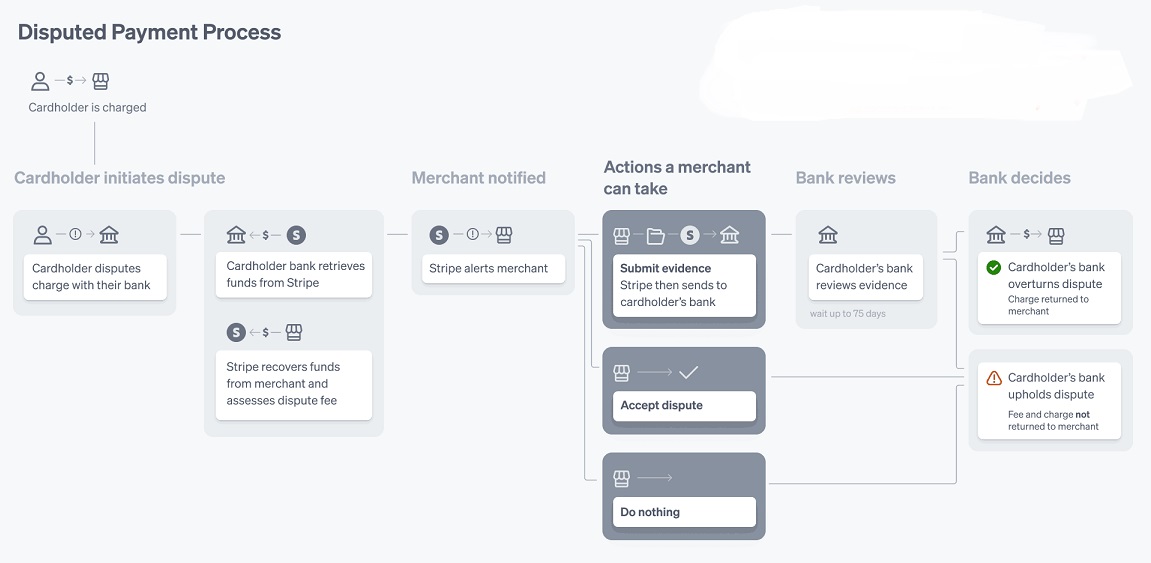
An example from Stripe
Now you might think that this sounds simple enough. But here’s the thing: this process can take anywhere from a few days to a few months. Yes, you read that right. Months. And here’s where things get interesting for us carders.
Some chargebacks happen quickly, while others are slower than someone on Xanax. This inconsistency makes our game interesting and profitable.
The Chargeback Roulette
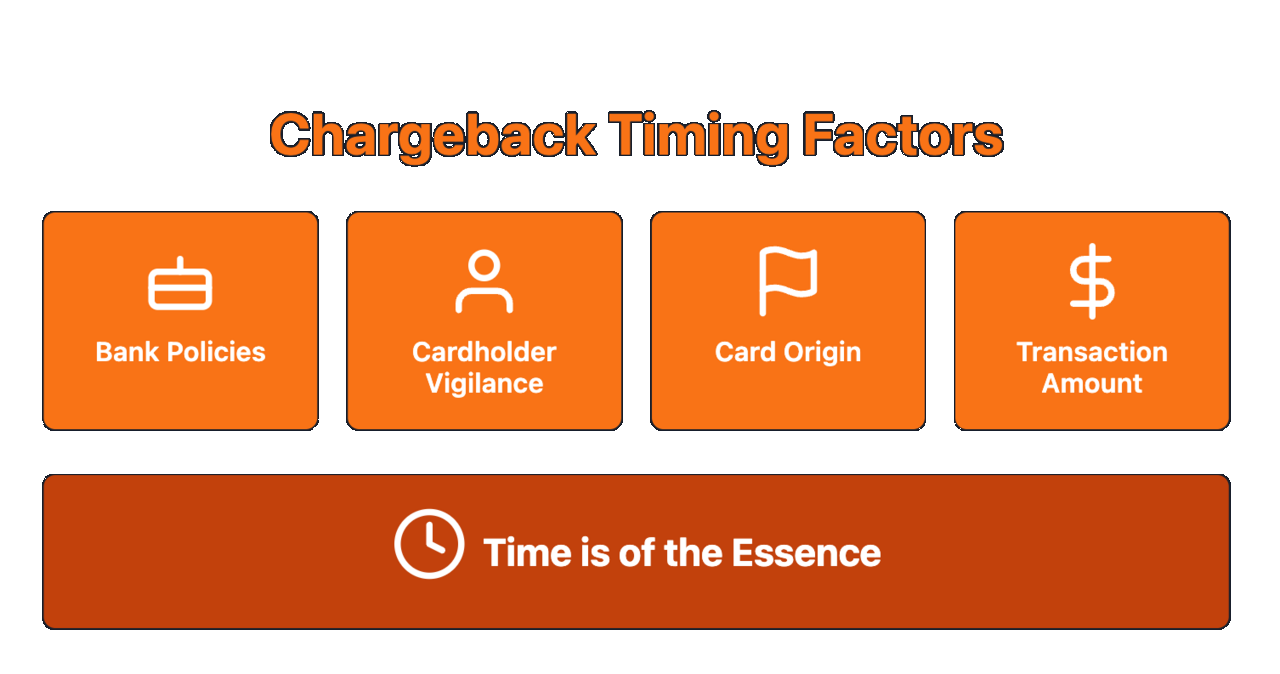
Let’s cut through the nonsense and understand why some chargebacks happen quickly and others are slow:
Banking policies play a huge role. Some banks have automated systems that instantly flag suspicious transactions, speeding up the chargeback process, while others are still using technology that was outdated when dinosaurs roamed the Earth. The type of transaction matters, too — large purchases and purchases from high-risk merchants are likely to be flagged faster.
Cardholder vigilance is another key factor. Some people check their statements more often than their phones, while others may not notice fraudulent charges for weeks or months. And let’s not forget about merchants — some fight chargebacks like their lives depend on it, while others are slow to respond and just don’t care because they know they’ll lose the dispute anyway.
US cards tend to be more advanced when it comes to fraud detection and chargebacks. Financial institutions in the Land of the Free are incredibly paranoid, which means that chargebacks on US cards are often faster. God bless America? It’s not just about technology — it’s about an entire system designed to protect cardholders (and rip off carders like us).
The amount of the transaction matters, too. A $5,000 electronics purchase raises red flags faster than a $20 fast food order. Not just from the bank’s perspective, but from the cardholder’s perspective as well. Using the card to buy a Netflix subscription won’t freak them out too much (because it could just be their brother using the card), but buying $3,000 in jewelry could give them a heart attack.
For carders, understanding these factors is important. It’s about knowing how much time you have before the shit hits the fan, and if the store you’re buying from will cancel shipments of already-verified purchases, or worse, demand that you return the shipped items to their warehouse once they smell a chargeback. Remember: some cards give you a long grace period, others will have you scrambling fast.
Tailor your strategy based on these factors. Hit the right targets with the right cards at the right time, and you might just get away with it. Mess up, and you’ll find yourself in the red with a ton of “SHIPMENT RETURNED” notifications.
Dispute Early Warning Systems
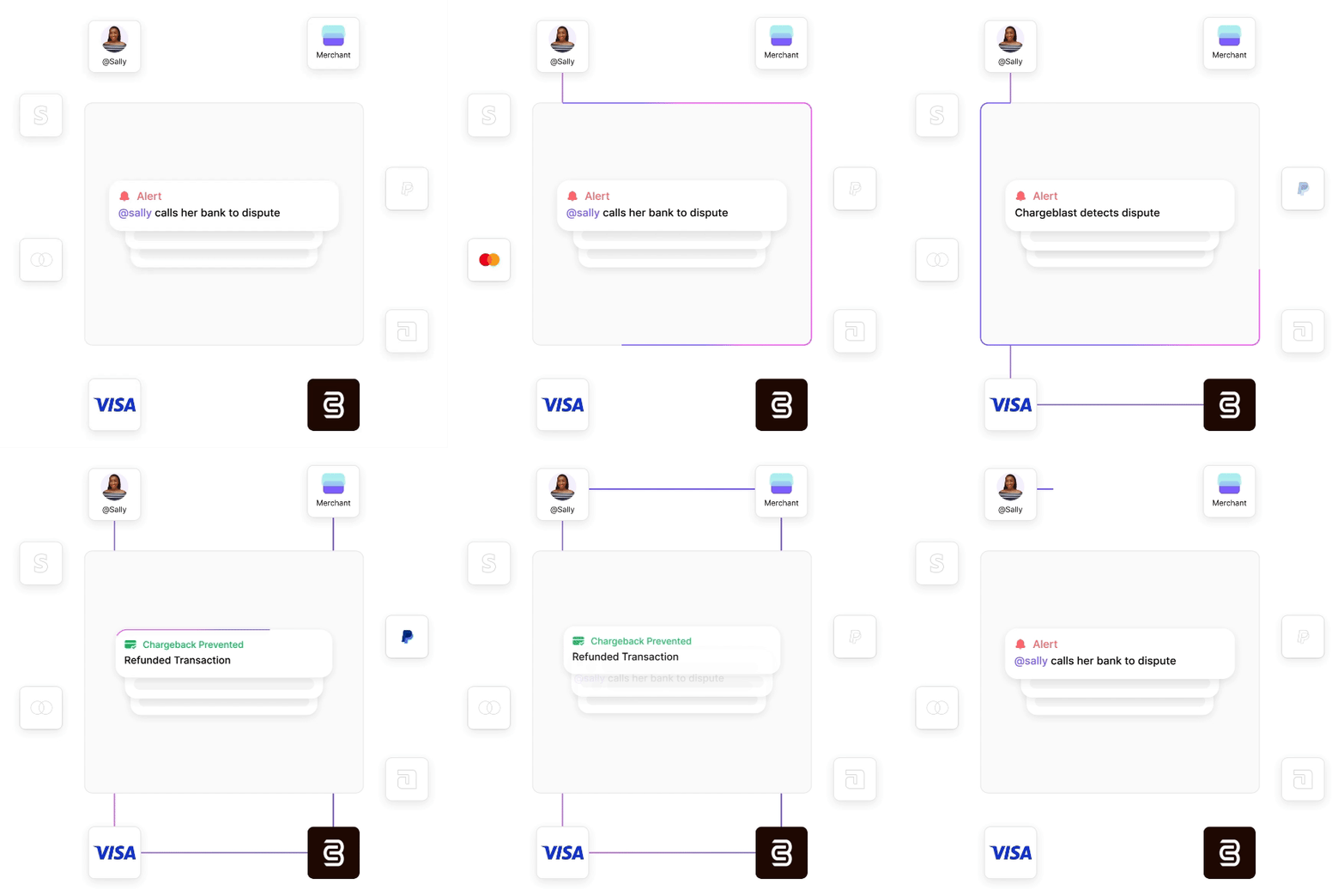
Early Fraud Alerts aren’t just a new toy for merchants; they’re the real deal when it comes to speeding up response times to chargebacks and cutting into our profits. We’re no longer just racing against shipping time; we’re getting sophisticated tools that alert merchants the moment a dispute or chargeback is initiated (even before an investigation has begun).
Systems like Verifis Rapid Dispute Resolution, Ethoca Alerts, and ChargeBlast create a direct channel between banks and merchants. When a cardholder so much as sneezes in the direction of a dispute, the bank sends that information over these networks, and they report the transaction to the merchant. The result? Merchants get the information within hours, sometimes even minutes. It’s like they have a crystal ball, and that’s bad news for us.
For carders, that means our window of opportunity is getting smaller. Merchants aren’t just sitting ducks anymore. They can freeze orders or stop shipments before a full chargeback occurs.
What does this mean for us? Speed is no longer just important; it’s do or die. We’re no longer just chasing cardholder vigilance. We’re in a full-on sprint against these alert systems that are itching to keep our orders out of our hands. It’s a two-front war, and we need to be smarter, faster, and more strategic than ever before.
We need to be thoughtful about our approach. Strike during high volume, when these systems are overwhelmed with data. A tsunami of transactions on Black Friday or Cyber Monday might give us an opportunity to slip through the cracks. And remember, these tools are powerful, but they’re not perfect. They still rely on cardholders to notice and report unauthorized charges. We can always fire off a spam campaign to a cardholder’s email address and phone number without them knowing. Our job is to stay one step ahead, find the weak links, and exploit them before they catch up.
In this new world, adaptability is key. We need to constantly change tactics, stay up to date with the latest alert systems, and find ways to get around them. It’s a game of cat and mouse, and we need to be the smartest, fastest mouse in the maze.
Final Thoughts: Adapt or Die
The world of chargebacks and fraud detection is evolving faster than a virus in a petri dish. As carders, we need to stay ahead of the curve or risk becoming just as obsolete.
Understanding the intricacies of chargebacks — from the factors that affect their speed to new early warning systems — is critical to our survival. It’s not just about knowing how to card; it’s about understanding the entire ecosystem in which we operate.
The tools are getting smarter, but so are we. It’s time to show what we can do in this evolving game. Remember, in the world of carding, knowledge isn’t just power — it’s damn survival.
So stay informed, be prepared to change tactics on the fly, and never stop learning. The chargeback game may be getting tougher, but that just means the rewards for those who master it will get sweeter. Now get out there and show those banks and merchants what real innovation looks like.
Ever wondered how you can order something, get it approved, and then, alas, have it cancelled before it ships due to a chargeback? But why do some cards take at least 2 months to refund or dispute a chargeback? It’s like the financial world’s own version of quantum mechanics — seemingly contradictory and often confusing, but once you understand it, you can bend reality to your will.
We’re not just talking about simple “customer calls bank, bank reverses charge” nonsense. No, we’re going to peel back the layers of this onion and reveal the inner workings of the chargeback process. From the moment a dispute begins to the final resolution, we’ll break down every step and show you how every player in this game — banks, merchants, and payment processors — is trying to cover their own ass while potentially scamming everyone else.
But wait, there’s more. We’re also going to tackle a new beast in the jungle: early fraud alerts. We’ll break down what these alerts mean for us carders, and how they’re changing the carding industry.
So grab a drink, tell your Telegram groups you’re going to shut up for a bit, and let’s dive into the world of chargebacks. By the time we’re done, you’ll understand this system better than the idiots who designed it. And remember, knowledge is power, especially when that knowledge helps you stay one step ahead of the game.
Chargebacks
You’ve just hit the jackpot by carding some overpriced crap to an unsuspecting merchant. But before you can pat yourself on the back, you need to understand what the fuck is going on behind the scenes. Welcome to the world of chargebacks.
A chargeback is basically just a fancy way of saying “give me my fucking money back.” When the real cardholder notices a charge he didn't make, he calls his bank and raises a stink. This sets in motion a process that is as confusing as it is slow.
Here's the basic sequence:
- Cardholder dispute: A customer notices a charge and calls their bank. "I didn't buy that crap!" they scream.
- Bank Investigation: The bank doesn't just take their word for it. They do some digging, which usually involves contacting the merchant.
- Merchant response: The merchant gets a chance to prove the legitimacy of the transaction. Good luck with that, carders.
- Bank's decision: After weighing the evidence (or lack thereof), the bank makes a decision. More often than not, they side with the cardholder.
- Money movement: If a chargeback occurs, funds will be withdrawn from the merchant's account.
An example from Stripe
Now you might think that this sounds simple enough. But here’s the thing: this process can take anywhere from a few days to a few months. Yes, you read that right. Months. And here’s where things get interesting for us carders.
Some chargebacks happen quickly, while others are slower than someone on Xanax. This inconsistency makes our game interesting and profitable.
The Chargeback Roulette
Let’s cut through the nonsense and understand why some chargebacks happen quickly and others are slow:
Banking policies play a huge role. Some banks have automated systems that instantly flag suspicious transactions, speeding up the chargeback process, while others are still using technology that was outdated when dinosaurs roamed the Earth. The type of transaction matters, too — large purchases and purchases from high-risk merchants are likely to be flagged faster.
Cardholder vigilance is another key factor. Some people check their statements more often than their phones, while others may not notice fraudulent charges for weeks or months. And let’s not forget about merchants — some fight chargebacks like their lives depend on it, while others are slow to respond and just don’t care because they know they’ll lose the dispute anyway.
US cards tend to be more advanced when it comes to fraud detection and chargebacks. Financial institutions in the Land of the Free are incredibly paranoid, which means that chargebacks on US cards are often faster. God bless America? It’s not just about technology — it’s about an entire system designed to protect cardholders (and rip off carders like us).
The amount of the transaction matters, too. A $5,000 electronics purchase raises red flags faster than a $20 fast food order. Not just from the bank’s perspective, but from the cardholder’s perspective as well. Using the card to buy a Netflix subscription won’t freak them out too much (because it could just be their brother using the card), but buying $3,000 in jewelry could give them a heart attack.
For carders, understanding these factors is important. It’s about knowing how much time you have before the shit hits the fan, and if the store you’re buying from will cancel shipments of already-verified purchases, or worse, demand that you return the shipped items to their warehouse once they smell a chargeback. Remember: some cards give you a long grace period, others will have you scrambling fast.
Tailor your strategy based on these factors. Hit the right targets with the right cards at the right time, and you might just get away with it. Mess up, and you’ll find yourself in the red with a ton of “SHIPMENT RETURNED” notifications.
Dispute Early Warning Systems
Early Fraud Alerts aren’t just a new toy for merchants; they’re the real deal when it comes to speeding up response times to chargebacks and cutting into our profits. We’re no longer just racing against shipping time; we’re getting sophisticated tools that alert merchants the moment a dispute or chargeback is initiated (even before an investigation has begun).
Systems like Verifis Rapid Dispute Resolution, Ethoca Alerts, and ChargeBlast create a direct channel between banks and merchants. When a cardholder so much as sneezes in the direction of a dispute, the bank sends that information over these networks, and they report the transaction to the merchant. The result? Merchants get the information within hours, sometimes even minutes. It’s like they have a crystal ball, and that’s bad news for us.
For carders, that means our window of opportunity is getting smaller. Merchants aren’t just sitting ducks anymore. They can freeze orders or stop shipments before a full chargeback occurs.
What does this mean for us? Speed is no longer just important; it’s do or die. We’re no longer just chasing cardholder vigilance. We’re in a full-on sprint against these alert systems that are itching to keep our orders out of our hands. It’s a two-front war, and we need to be smarter, faster, and more strategic than ever before.
We need to be thoughtful about our approach. Strike during high volume, when these systems are overwhelmed with data. A tsunami of transactions on Black Friday or Cyber Monday might give us an opportunity to slip through the cracks. And remember, these tools are powerful, but they’re not perfect. They still rely on cardholders to notice and report unauthorized charges. We can always fire off a spam campaign to a cardholder’s email address and phone number without them knowing. Our job is to stay one step ahead, find the weak links, and exploit them before they catch up.
In this new world, adaptability is key. We need to constantly change tactics, stay up to date with the latest alert systems, and find ways to get around them. It’s a game of cat and mouse, and we need to be the smartest, fastest mouse in the maze.
Final Thoughts: Adapt or Die
The world of chargebacks and fraud detection is evolving faster than a virus in a petri dish. As carders, we need to stay ahead of the curve or risk becoming just as obsolete.
Understanding the intricacies of chargebacks — from the factors that affect their speed to new early warning systems — is critical to our survival. It’s not just about knowing how to card; it’s about understanding the entire ecosystem in which we operate.
The tools are getting smarter, but so are we. It’s time to show what we can do in this evolving game. Remember, in the world of carding, knowledge isn’t just power — it’s damn survival.
So stay informed, be prepared to change tactics on the fly, and never stop learning. The chargeback game may be getting tougher, but that just means the rewards for those who master it will get sweeter. Now get out there and show those banks and merchants what real innovation looks like.