


If you’ve read most of my guides, you already know that I like to be on the cutting edge of technology. I’m always trying to find new ways to bypass new anti-fraud systems or break even newer website security systems. This approach to technology is the only way to keep up with advances in payments and website security.
And what could be more cutting edge than AI agents? Today, we’ll look at what AI agents can be associated with carding and how we can use them to make more profits.
AI Agents
AI agents are autonomous software systems that can work independently of each other to perform tasks on the web. Unlike traditional bots that follow fixed scripts, these systems can actually think, make decisions, and navigate websites just like a human would.
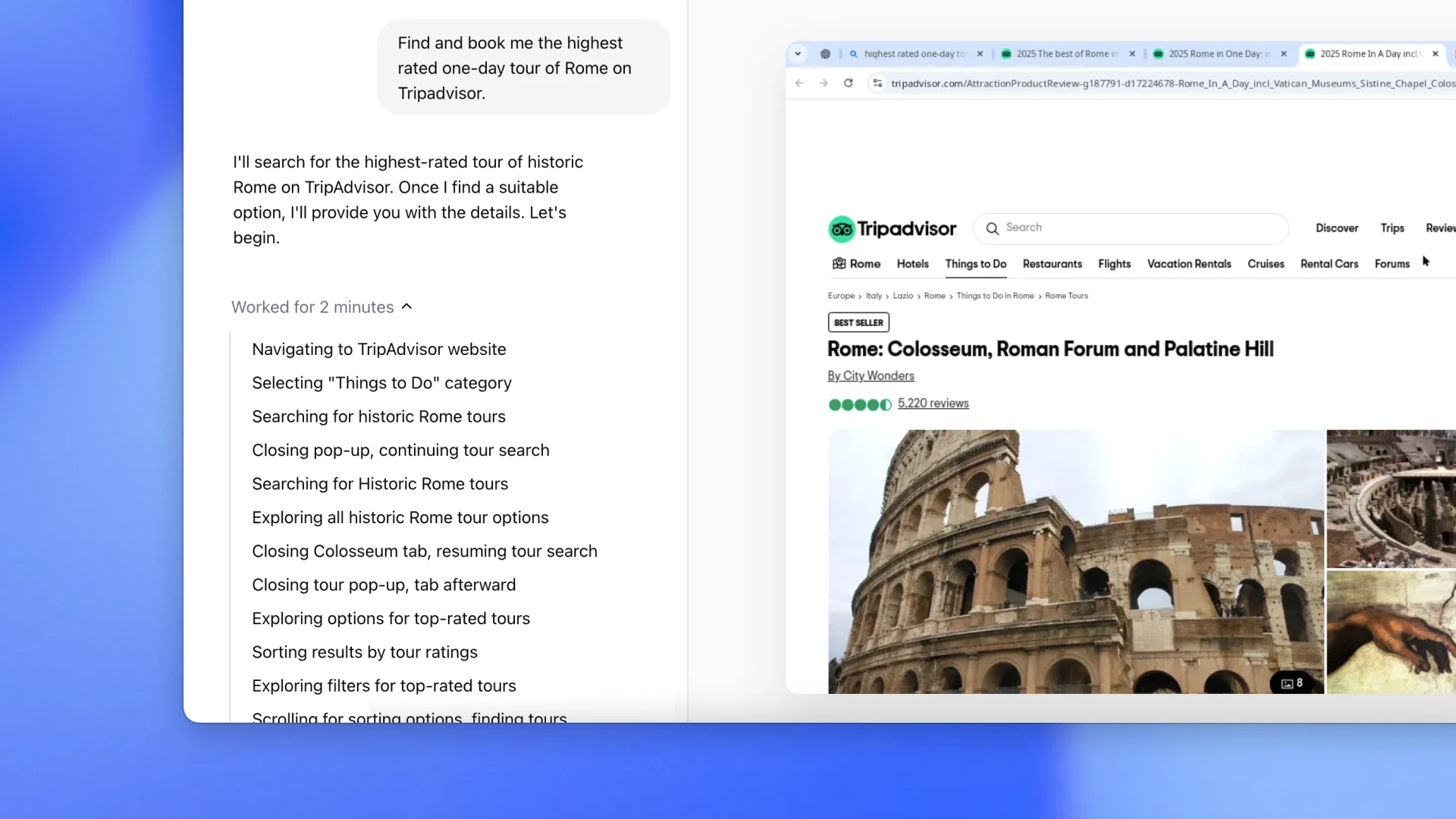
Picture this: An AI agent is essentially a digital ghost with a web browser. It can click buttons, fill out forms, navigate menus, and make transactions without human intervention. Platforms like OpenAI’s ChatGPT Operator, China’s Manus AI, and Replits agent framework are leading the way.

What makes these agents interesting for our purposes is that they don’t just follow predetermined paths — they adapt, troubleshoot, and perform complex tasks just like a human would. Want to book a flight? Find a hotel? Buy something online? These agents can handle it all.
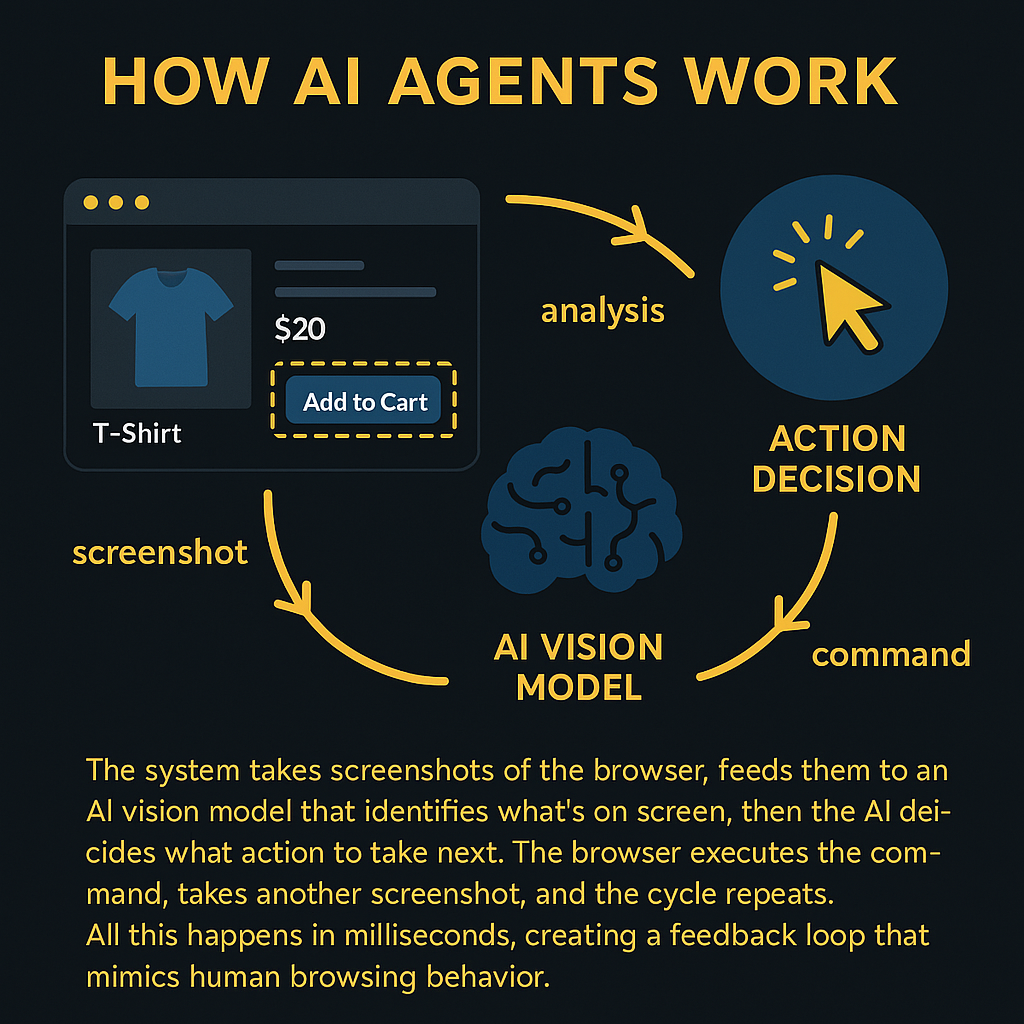
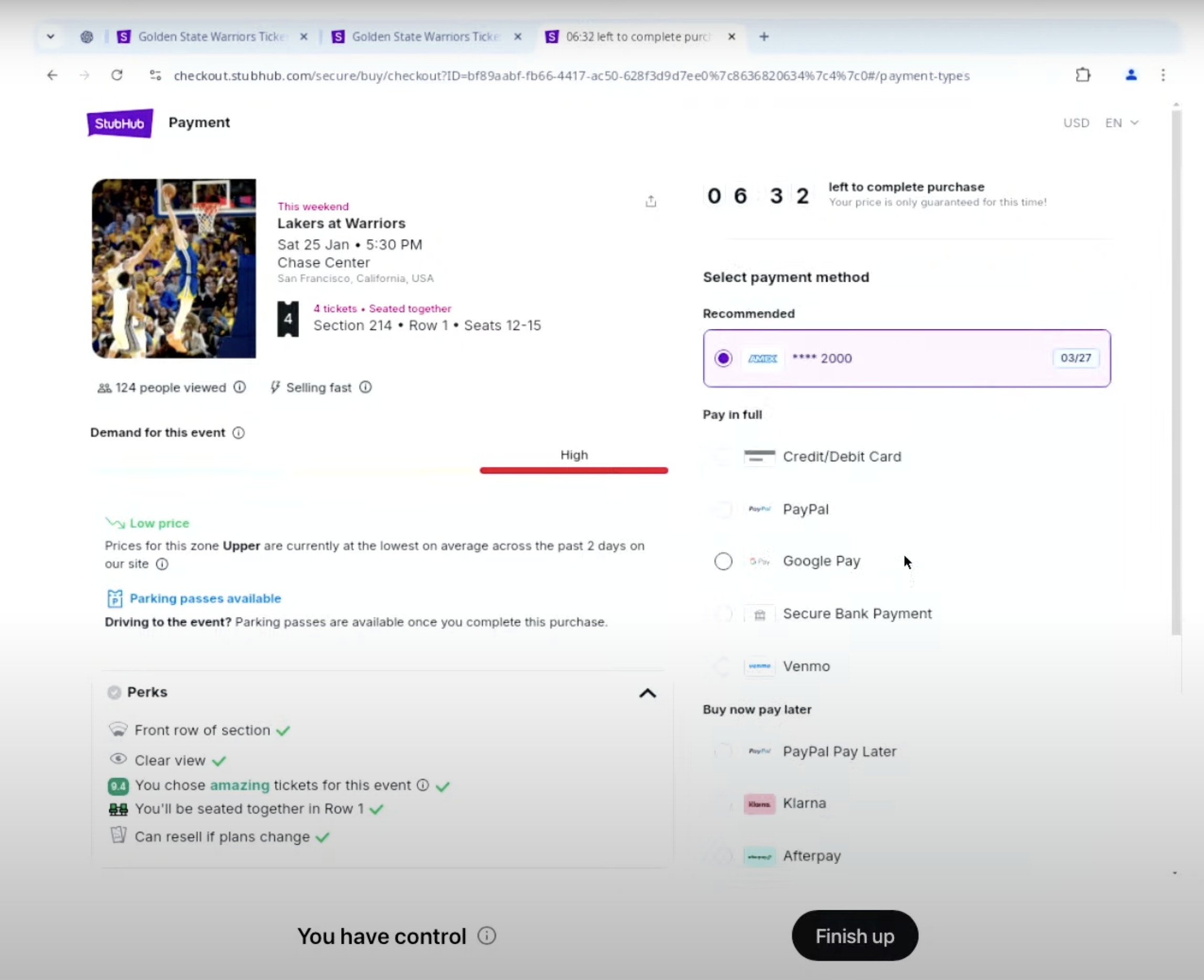
The technical part works like this: The system takes screenshots of the browser, feeds them into an AI model that figures out what’s on the screen, and then the AI decides what action to take next. “See that ‘Add to Cart’ button? Click it.” The browser executes the command, takes another screenshot, and the cycle repeats. All of this happens in milliseconds, creating a feedback loop that mimics human browsing behavior.
The promise? In the future, you could potentially feed your agent a list of cards and have it card a bunch of sites while you relax with a beer. That’s not science fiction — that’s where this technology is headed.
Architecture and Anti-Fraud
What really keeps payment companies up at night isn’t just the idea that carders could force an AI slave to make transactions. You could pay some random dude on Fiverr to do that. No, what makes them bad bricks is that the infrastructure of these AI platforms fundamentally undermines all the tools their anti-fraud systems use to block transactions.
Let’s break down a typical AI agent platform, like ChatGPT Operator:
Consider how these platforms run on Linux cloud servers with automated Chrome browsers. Every agent session runs from the same data center IP addresses owned by companies like OpenAI or Manus. When you use Operator, your request doesn't come from your home IP address — it comes from OpenAI servers in some AWS data center in Virginia.
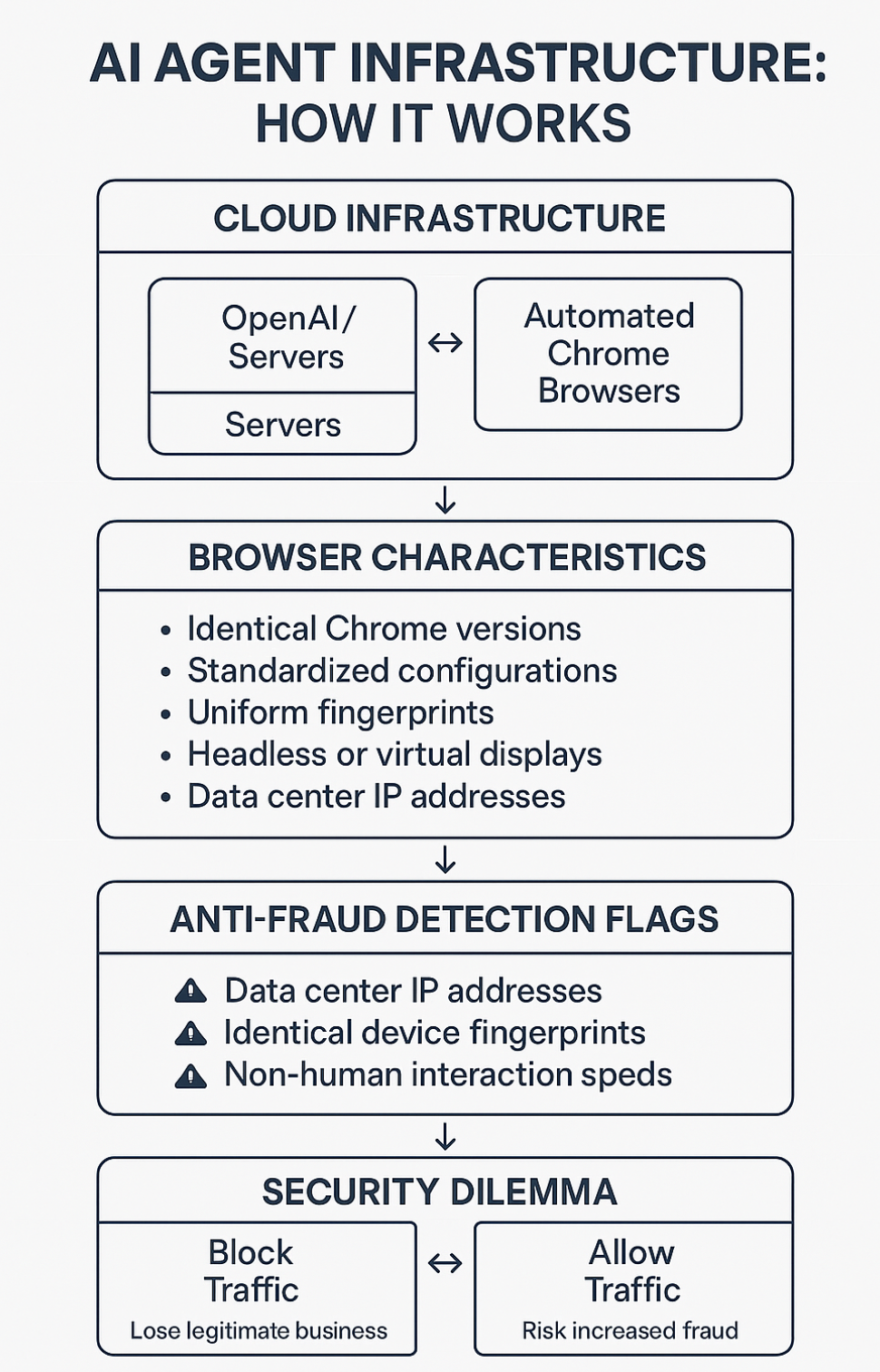
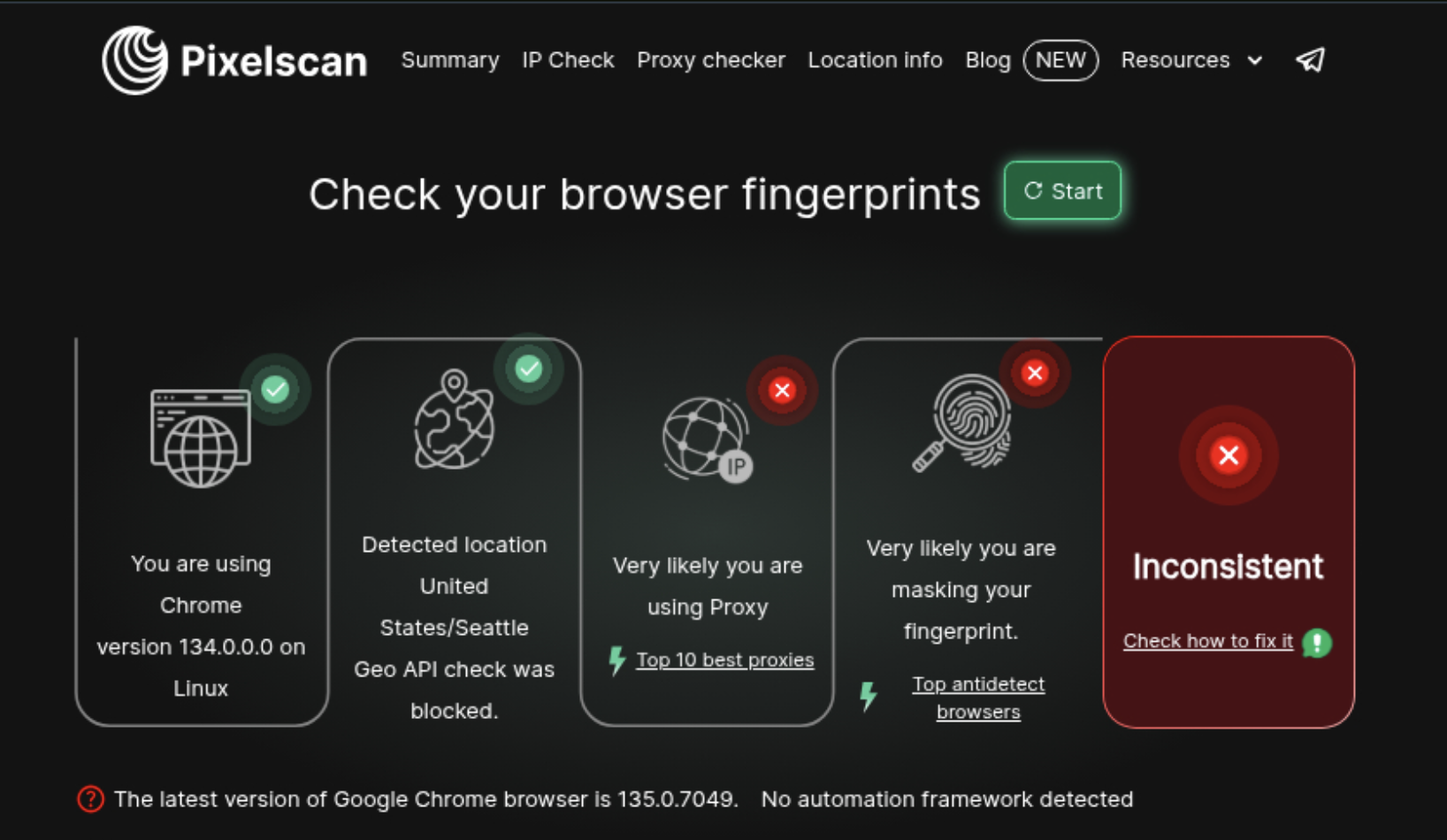
These browsers are identical across all sessions. Same Chrome version, same OS, same configurations, same damn everything. While your personal browser has a unique fingerprint – installed extensions, fonts, screen resolution, etc. – these cloud browsers are like mass-produced clones. They either run without a screen (invisible) or on a virtual display to mimic a real browser. Anti
-fraud systems typically flag suspicious activity based on:
It's like a prison where all the inmates and guards suddenly wear the same uniform. How the hell do you know who's who?
The Coming Golden Age of Agent Carding
"If this is true, then I can just take an AI agent plan and get into Booking and all those other hard to get sites?" Not so fast, bro. There's another big factor that makes it impossible right now: there just aren't enough people using AI agents.
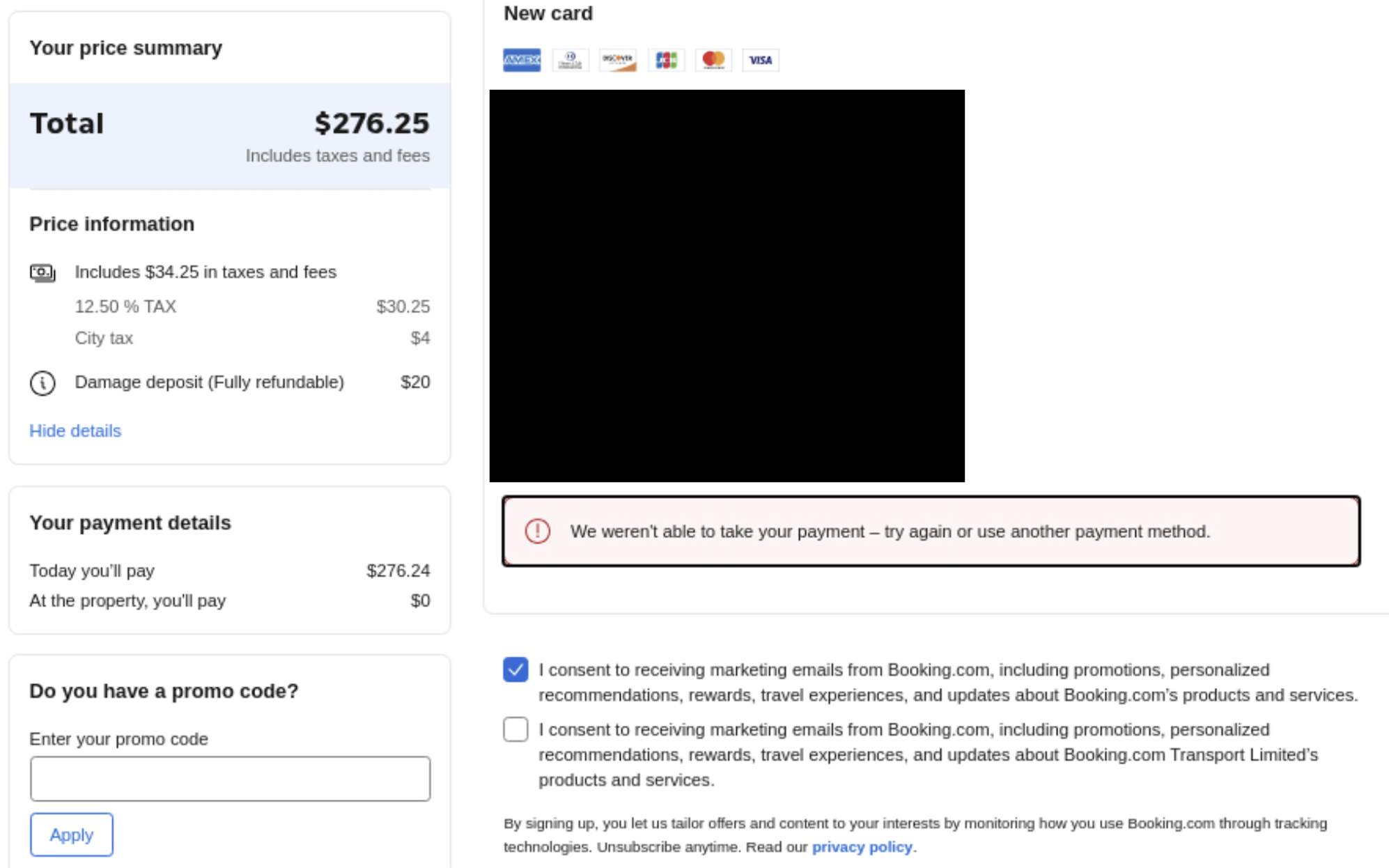
The technology is currently hideous and expensive, and only tech enthusiasts care about it. Unless OpenAI forces them, there's no incentive for companies to whitelist and approve transactions made using AI agents. I've tried it myself a few times, and most transactions still get rejected.
The golden age we are looking forward to is the golden mean, where:
That window of opportunity will arrive — maybe within a year. When companies start losing millions by rejecting legitimate transactions from AI agents, they will have to adapt. They will start whitelisting known agent IP addresses and browser fingerprints, creating a huge vulnerability that we can exploit.
Think of it this way: if banks suddenly decided that everyone wearing a blue shirt must be trustworthy, what would criminals do? They’d all start wearing damn blue shirts.
The real vulnerability isn’t just that agents can automate carding — it’s that legitimate agent traffic creates cover for fraudulent agent traffic because they look identical to fraud protection systems.
Where the rubber meets the road
I’m not a fortune teller, so I don’t know exactly how this will play out. There may already be sites that have struck deals with OpenAI to pre-approve agent transactions — you’ll have to find out through testing.
What I do know is that as these agents become more common, fraud prevention will have to move from human vs. bot detection to good intentions vs. bad intentions detection. They’ll have to look beyond technical fingerprints to patterns in behavior and context.
At the moment, agent platforms are still too new and unreliable to be reliable tools for carding. But keep a close eye on this space — when mass adoption forces companies to accept agent-initiated transactions, there will be a window of opportunity before security catches up.
The uniformity of agent infrastructure creates a perfect storm: legitimate transactions that look identical to fraudulent ones, forcing companies to lower their security standards to avoid false positives.
When that day comes, I’ll be here telling you I told you so. The only question is whether you’ll be ready to profit from it.
(c) Contact the author here: d0ctrine
And what could be more cutting edge than AI agents? Today, we’ll look at what AI agents can be associated with carding and how we can use them to make more profits.
AI Agents
AI agents are autonomous software systems that can work independently of each other to perform tasks on the web. Unlike traditional bots that follow fixed scripts, these systems can actually think, make decisions, and navigate websites just like a human would.
Picture this: An AI agent is essentially a digital ghost with a web browser. It can click buttons, fill out forms, navigate menus, and make transactions without human intervention. Platforms like OpenAI’s ChatGPT Operator, China’s Manus AI, and Replits agent framework are leading the way.
What makes these agents interesting for our purposes is that they don’t just follow predetermined paths — they adapt, troubleshoot, and perform complex tasks just like a human would. Want to book a flight? Find a hotel? Buy something online? These agents can handle it all.
The technical part works like this: The system takes screenshots of the browser, feeds them into an AI model that figures out what’s on the screen, and then the AI decides what action to take next. “See that ‘Add to Cart’ button? Click it.” The browser executes the command, takes another screenshot, and the cycle repeats. All of this happens in milliseconds, creating a feedback loop that mimics human browsing behavior.
The promise? In the future, you could potentially feed your agent a list of cards and have it card a bunch of sites while you relax with a beer. That’s not science fiction — that’s where this technology is headed.
Architecture and Anti-Fraud
What really keeps payment companies up at night isn’t just the idea that carders could force an AI slave to make transactions. You could pay some random dude on Fiverr to do that. No, what makes them bad bricks is that the infrastructure of these AI platforms fundamentally undermines all the tools their anti-fraud systems use to block transactions.
Let’s break down a typical AI agent platform, like ChatGPT Operator:
Consider how these platforms run on Linux cloud servers with automated Chrome browsers. Every agent session runs from the same data center IP addresses owned by companies like OpenAI or Manus. When you use Operator, your request doesn't come from your home IP address — it comes from OpenAI servers in some AWS data center in Virginia.
These browsers are identical across all sessions. Same Chrome version, same OS, same configurations, same damn everything. While your personal browser has a unique fingerprint – installed extensions, fonts, screen resolution, etc. – these cloud browsers are like mass-produced clones. They either run without a screen (invisible) or on a virtual display to mimic a real browser. Anti
-fraud systems typically flag suspicious activity based on:
- IP reputations (data center IP addresses are suspicious)
- Device fingerprints (identical device fingerprints for multiple users scream fraud)
- Behavioural patterns (people don't fill out forms in 0.5 seconds)
It's like a prison where all the inmates and guards suddenly wear the same uniform. How the hell do you know who's who?
The Coming Golden Age of Agent Carding
"If this is true, then I can just take an AI agent plan and get into Booking and all those other hard to get sites?" Not so fast, bro. There's another big factor that makes it impossible right now: there just aren't enough people using AI agents.
The technology is currently hideous and expensive, and only tech enthusiasts care about it. Unless OpenAI forces them, there's no incentive for companies to whitelist and approve transactions made using AI agents. I've tried it myself a few times, and most transactions still get rejected.
The golden age we are looking forward to is the golden mean, where:
- Enough ordinary people are using AI agents that companies are forced to accept their transactions.
- Fraud protection systems have not yet matured to the point of identifying and distinguishing between legitimate and fraudulent use of agents.
That window of opportunity will arrive — maybe within a year. When companies start losing millions by rejecting legitimate transactions from AI agents, they will have to adapt. They will start whitelisting known agent IP addresses and browser fingerprints, creating a huge vulnerability that we can exploit.
Think of it this way: if banks suddenly decided that everyone wearing a blue shirt must be trustworthy, what would criminals do? They’d all start wearing damn blue shirts.
The real vulnerability isn’t just that agents can automate carding — it’s that legitimate agent traffic creates cover for fraudulent agent traffic because they look identical to fraud protection systems.
Where the rubber meets the road
I’m not a fortune teller, so I don’t know exactly how this will play out. There may already be sites that have struck deals with OpenAI to pre-approve agent transactions — you’ll have to find out through testing.
What I do know is that as these agents become more common, fraud prevention will have to move from human vs. bot detection to good intentions vs. bad intentions detection. They’ll have to look beyond technical fingerprints to patterns in behavior and context.
At the moment, agent platforms are still too new and unreliable to be reliable tools for carding. But keep a close eye on this space — when mass adoption forces companies to accept agent-initiated transactions, there will be a window of opportunity before security catches up.
The uniformity of agent infrastructure creates a perfect storm: legitimate transactions that look identical to fraudulent ones, forcing companies to lower their security standards to avoid false positives.
When that day comes, I’ll be here telling you I told you so. The only question is whether you’ll be ready to profit from it.
(c) Contact the author here: d0ctrine