


Forget everything you think you know about carding. If you’re still relying solely on junk cards and fancy proxies, you’re living in the fucking Stone Age. Welcome to the next level of bullshit: social engineering.
It’s not just about how to smoothly sneak past customer support. We’re talking about psychological tricks that can transform your carding game from a hit-or-miss game into a constant money maker. Social engineering is what separates the amateurs from the pros making six figures.
In this introductory guide, we’ll scratch the surface of how social engineering can enhance your carding operation. From creating believable characters to manipulating customer service reps, we’ll cover the basics that can take your game to the next level.
But here’s the thing: social engineering is fucking huge. It extends far beyond carding, into all aspects of security and manipulation. We’re just getting started today. Consider it your gateway drug into the world of human hacking.
The Curious Case of Malone Yam
Unless you’ve been living under a rock, you’ve probably heard about the arrest of Malone Ayem and his crew. These idiots managed to pull off a $243 million heist from a single location using nothing but social engineering skills. No fancy hacks, no zero-day exploits, just pure psychological manipulation.
LINK HERE
They posed as Google support, hacked multiple accounts, and then pretended to be from the Gemini exchange “helping” with the “hack.” Before anyone knew what hit them, $238 million in cryptocurrency had vanished into thin air. What they made in a couple of hours by making a bunch of calls is more than most of you will make in your entire lifetime combined!

Now, I’m not a fan of how sloppy they were. These idiots got caught flaunting their loot on social media like a bunch of trust fund kids on spring break. But the most mind-boggling thing is that a bunch of amateur scammers with barely any technical skills managed to pull off one of the biggest cryptocurrency heists in history.
This case proves what I’ve been saying all along: social engineering isn’t just another tool in your toolbox, it’s a whole damn toolbox. It doesn’t matter how secure the system is, as long as you can convince the person behind it to hand over the keys.
What is social engineering?
Albert Einstein and his quote are still relevant decades after his death. While AI-powered fraud detection systems and algorithms are getting smarter, humans remain the weakest link in any security chain. These flesh sacks haven’t updated their firmware since the Stone Age. They still fall for the same old tricks that worked decades ago.
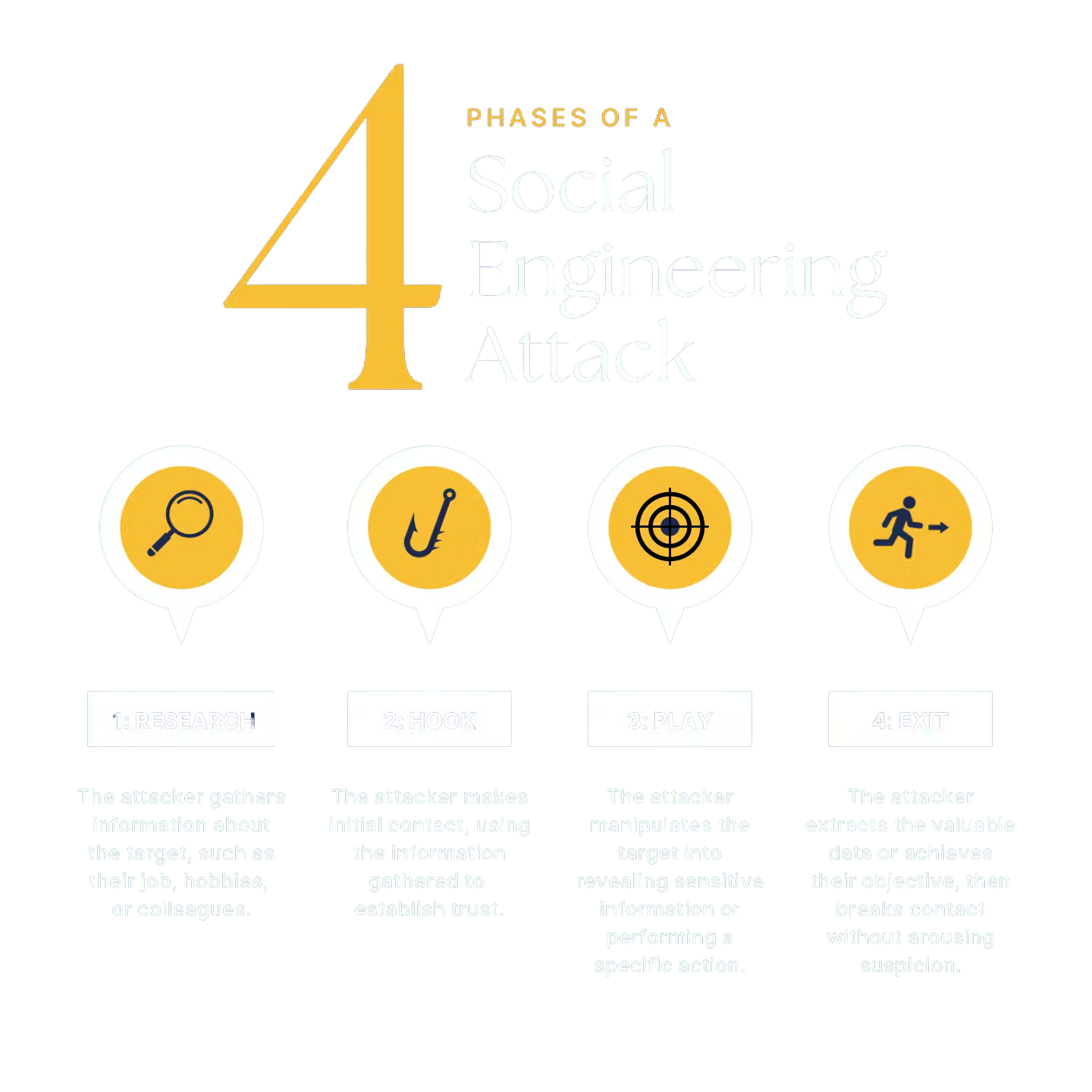
You can fix software, but you can’t fix stupidity. No matter how much security training companies force their employees to go through, humans will always be susceptible to manipulation. Fear, urgency, greed, and the desire to be helpful are hardwired into our monkey brains. A skilled social engineer knows exactly which buttons to push to bypass logical thinking and get straight to the decision-making center of the lizard brain.
That’s why phishing emails still work in 2024. That’s why vishing (voice phishing) is more effective than ever. Heck, that’s why Malone and his team managed to steal $243 million with a few phone calls. As long as humans are involved in decision-making, there will always be a way for someone who knows how to pull the right psychological strings.
Social Engineering for Carders
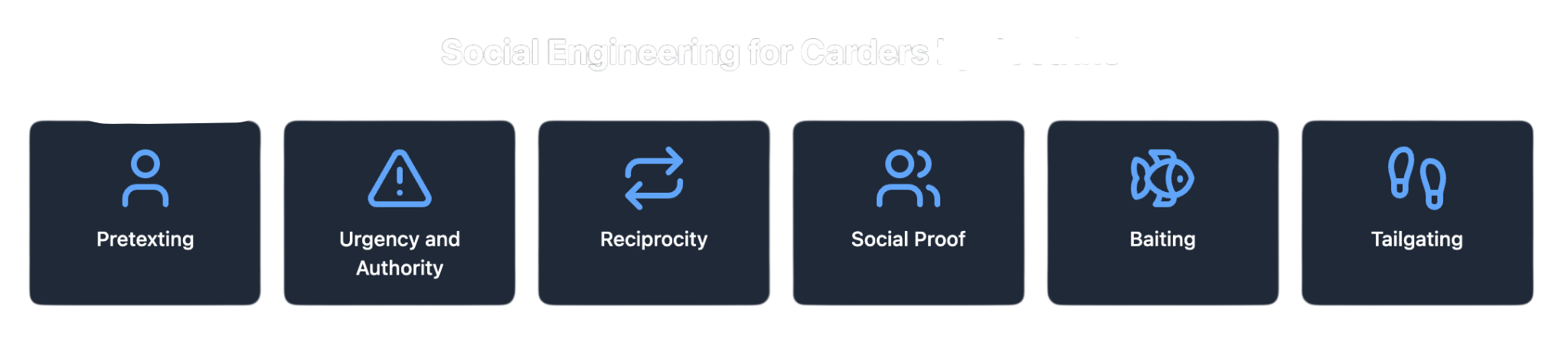
Since social engineering is a pretty broad topic, we’ll focus on a few concepts and how they might apply to you as a carder:
Pretexting: It’s all about creating a believable backstory. As a carder, you can use pretexting to change the shipping address after the order passes the AI review. “Hey, I’m calling about order #12345. I accidentally used my old address. Could you update it?” Another example: create a persona of a SaaS startup founder trying to withdraw funds from Stripe. Or maybe you’re trying to recover your Remitly account.
The key to successful pretexting is consistency and detail. Describe your persona and stick to it. If you’re posing as a busy executive, don’t suddenly start sounding like a surfer. Research your chosen persona thoroughly. Remember that pretexting isn’t just about the initial story. Be prepared for follow-up questions. Rehearse your pretext in advance so you can deliver it with confidence.
Urgency and Authority: Fraudsters often use this combination to extract one-time passwords from cardholders. “This is the bank’s security department. We have detected suspicious activity on your account. We need the verification code we just sent you immediately or your account will be blocked.”
The pressure of urgency combined with the illusion of authority can make people act without thinking.
This technique works because it triggers our fight-or-flight response, which overrides logical thinking. When using this approach in your carding operations, turn up the pressure. Use phrases like “immediate action is required” or “there is a security breach.” The more you can make your target feel like they could face negative consequences if they don’t comply, the better.
As for authority, impersonating financial institutions can be effective. But don’t limit yourself. Technical support agencies or even the target’s own senior management can work. Simply pretending to be a senior Amazon rep who worked on getting a free replacement for any item a year ago. The key is to project confidence and use insider language that reinforces your perceived authority.
Reciprocity: This works wonders with customer service reps who are used to dealing with jerks all day. When trying to recover an Amazon account, be especially friendly and understanding. “I completely understand that you’re just following protocol. I really appreciate you taking the time to help me out here.” Even if they can’t directly reinstate you, they’ll likely transfer you to someone who can.
Reciprocity is about creating a sense of indebtedness. Start by doing something for your target, even if it’s just being unusually nice. Compliment them on their helpfulness. Express genuine understanding of their situation.
For maximum impact, combine reciprocity with other tactics. If you’re using an excuse, like the confused senior citizen, express deep gratitude for their help. Not only does this create reciprocity, it also makes them less likely to suspect you of carding.
Social Proof: In credit card fraud, this might look like: “Many of our valued customers are checking their information today due to a system update.” Or, “Several of our customers in your industry recently increased their credit limits to take advantage of our new rewards program.” People are more likely to comply if they think others are doing the same.
Social proof takes advantage of our herd instincts. We’re programmed to follow the crowd. For carders, this principle is damn gold. When trying to extract information or push a suspicious transaction, make it seem like something normal that everyone else is doing.
The key is to make your target feel like they’re missing out or falling behind if they don’t comply. Bonus points if you can make it specific to their demographic or industry.
Bait: This is gold for phishing campaigns. “Click here for a chance to win a free iPhone!” or “Exclusive 90% discount for the next hour only!” For crypto scams, it might be “Install our wallet app and get 100 free tokens!” The promise of something valuable lowers people’s guard.
Bait works because it triggers greed and curiosity. People will ignore red flags if they think there’s something in it for them. As a carder, you can use this to your advantage in a number of ways.
For phishing campaigns, tailor the bait to your target audience. In carding operations, bait can help you bypass security questions. Remember that the bait doesn’t always have to be a reward. Sometimes the promise of avoiding losses works just as well.
Tailgating: While this works to bypass AI, it’s also effective with humans. Let’s say you’re trying to hack a high-end Razer laptop. Start with small, legitimate accessory purchases. Build a story. Then, when you try to make a big score and get rejected, contact customer service: “I’ve been a loyal customer for months. I don’t understand why my purchase isn’t going through.” This established story makes your claim more believable.
Tailgating in carding is all about building trust over time. It’s a long game. Essentially, you’re creating a Trojan horse of legitimacy to sneak your scam shit through. This method works especially well with luxury brands or expensive electronics. These companies often have loyalty programs or special treatment for repeat customers.
Social Engineering as Your Superpower
We’ve barely scratched the surface of social engineering. These concepts are just the tip of the iceberg, but they’re enough to rewire your brain and start thinking like a true social engineer.
Implementing these techniques into your carding operations can take your game to a whole new level. Suddenly, sites you thought were invulnerable are vulnerable. That designer store with top-notch security? A well-crafted pretext and a little social proof might just crack it.
Social engineering isn’t just a way to bypass customer service. It’s manipulating every human touchpoint in the carding process. From creating believable personas to pushing through declined transactions, these skills are your keys to the carding kingdom.
It takes practice. You can’t just read a manual and become a master of manipulation overnight. Start small. Test these techniques on low-risk targets. Refine your approach. Build your confidence. Over time, you’ll develop an instinct for which buttons to push in any given situation.
Remember, while other carders are feverishly chasing the latest techniques, you’ll be playing 4D chess with human psychology. And unlike coding skills or hacking techniques, social engineering never goes out of style. As long as people are involved in decision making, there will always be a way for those who know how to pull the right strings.
So get out there and start honing your social engineering skills. Your carding success rate will thank you. Just remember: with great power comes great responsibility… and the potential for serious profits.
It’s not just about how to smoothly sneak past customer support. We’re talking about psychological tricks that can transform your carding game from a hit-or-miss game into a constant money maker. Social engineering is what separates the amateurs from the pros making six figures.
In this introductory guide, we’ll scratch the surface of how social engineering can enhance your carding operation. From creating believable characters to manipulating customer service reps, we’ll cover the basics that can take your game to the next level.
But here’s the thing: social engineering is fucking huge. It extends far beyond carding, into all aspects of security and manipulation. We’re just getting started today. Consider it your gateway drug into the world of human hacking.
The Curious Case of Malone Yam
Unless you’ve been living under a rock, you’ve probably heard about the arrest of Malone Ayem and his crew. These idiots managed to pull off a $243 million heist from a single location using nothing but social engineering skills. No fancy hacks, no zero-day exploits, just pure psychological manipulation.
LINK HERE
They posed as Google support, hacked multiple accounts, and then pretended to be from the Gemini exchange “helping” with the “hack.” Before anyone knew what hit them, $238 million in cryptocurrency had vanished into thin air. What they made in a couple of hours by making a bunch of calls is more than most of you will make in your entire lifetime combined!
Now, I’m not a fan of how sloppy they were. These idiots got caught flaunting their loot on social media like a bunch of trust fund kids on spring break. But the most mind-boggling thing is that a bunch of amateur scammers with barely any technical skills managed to pull off one of the biggest cryptocurrency heists in history.
This case proves what I’ve been saying all along: social engineering isn’t just another tool in your toolbox, it’s a whole damn toolbox. It doesn’t matter how secure the system is, as long as you can convince the person behind it to hand over the keys.
What is social engineering?
Two things are infinite: the universe and human stupidity; and I'm not sure about the universe.
Albert Einstein and his quote are still relevant decades after his death. While AI-powered fraud detection systems and algorithms are getting smarter, humans remain the weakest link in any security chain. These flesh sacks haven’t updated their firmware since the Stone Age. They still fall for the same old tricks that worked decades ago.
You can fix software, but you can’t fix stupidity. No matter how much security training companies force their employees to go through, humans will always be susceptible to manipulation. Fear, urgency, greed, and the desire to be helpful are hardwired into our monkey brains. A skilled social engineer knows exactly which buttons to push to bypass logical thinking and get straight to the decision-making center of the lizard brain.
That’s why phishing emails still work in 2024. That’s why vishing (voice phishing) is more effective than ever. Heck, that’s why Malone and his team managed to steal $243 million with a few phone calls. As long as humans are involved in decision-making, there will always be a way for someone who knows how to pull the right psychological strings.
Social Engineering for Carders
Since social engineering is a pretty broad topic, we’ll focus on a few concepts and how they might apply to you as a carder:
Pretexting: It’s all about creating a believable backstory. As a carder, you can use pretexting to change the shipping address after the order passes the AI review. “Hey, I’m calling about order #12345. I accidentally used my old address. Could you update it?” Another example: create a persona of a SaaS startup founder trying to withdraw funds from Stripe. Or maybe you’re trying to recover your Remitly account.
The key to successful pretexting is consistency and detail. Describe your persona and stick to it. If you’re posing as a busy executive, don’t suddenly start sounding like a surfer. Research your chosen persona thoroughly. Remember that pretexting isn’t just about the initial story. Be prepared for follow-up questions. Rehearse your pretext in advance so you can deliver it with confidence.
Urgency and Authority: Fraudsters often use this combination to extract one-time passwords from cardholders. “This is the bank’s security department. We have detected suspicious activity on your account. We need the verification code we just sent you immediately or your account will be blocked.”
The pressure of urgency combined with the illusion of authority can make people act without thinking.
This technique works because it triggers our fight-or-flight response, which overrides logical thinking. When using this approach in your carding operations, turn up the pressure. Use phrases like “immediate action is required” or “there is a security breach.” The more you can make your target feel like they could face negative consequences if they don’t comply, the better.
As for authority, impersonating financial institutions can be effective. But don’t limit yourself. Technical support agencies or even the target’s own senior management can work. Simply pretending to be a senior Amazon rep who worked on getting a free replacement for any item a year ago. The key is to project confidence and use insider language that reinforces your perceived authority.
Reciprocity: This works wonders with customer service reps who are used to dealing with jerks all day. When trying to recover an Amazon account, be especially friendly and understanding. “I completely understand that you’re just following protocol. I really appreciate you taking the time to help me out here.” Even if they can’t directly reinstate you, they’ll likely transfer you to someone who can.
Reciprocity is about creating a sense of indebtedness. Start by doing something for your target, even if it’s just being unusually nice. Compliment them on their helpfulness. Express genuine understanding of their situation.
For maximum impact, combine reciprocity with other tactics. If you’re using an excuse, like the confused senior citizen, express deep gratitude for their help. Not only does this create reciprocity, it also makes them less likely to suspect you of carding.
Social Proof: In credit card fraud, this might look like: “Many of our valued customers are checking their information today due to a system update.” Or, “Several of our customers in your industry recently increased their credit limits to take advantage of our new rewards program.” People are more likely to comply if they think others are doing the same.
Social proof takes advantage of our herd instincts. We’re programmed to follow the crowd. For carders, this principle is damn gold. When trying to extract information or push a suspicious transaction, make it seem like something normal that everyone else is doing.
The key is to make your target feel like they’re missing out or falling behind if they don’t comply. Bonus points if you can make it specific to their demographic or industry.
Bait: This is gold for phishing campaigns. “Click here for a chance to win a free iPhone!” or “Exclusive 90% discount for the next hour only!” For crypto scams, it might be “Install our wallet app and get 100 free tokens!” The promise of something valuable lowers people’s guard.
Bait works because it triggers greed and curiosity. People will ignore red flags if they think there’s something in it for them. As a carder, you can use this to your advantage in a number of ways.
For phishing campaigns, tailor the bait to your target audience. In carding operations, bait can help you bypass security questions. Remember that the bait doesn’t always have to be a reward. Sometimes the promise of avoiding losses works just as well.
Tailgating: While this works to bypass AI, it’s also effective with humans. Let’s say you’re trying to hack a high-end Razer laptop. Start with small, legitimate accessory purchases. Build a story. Then, when you try to make a big score and get rejected, contact customer service: “I’ve been a loyal customer for months. I don’t understand why my purchase isn’t going through.” This established story makes your claim more believable.
Tailgating in carding is all about building trust over time. It’s a long game. Essentially, you’re creating a Trojan horse of legitimacy to sneak your scam shit through. This method works especially well with luxury brands or expensive electronics. These companies often have loyalty programs or special treatment for repeat customers.
Social Engineering as Your Superpower
We’ve barely scratched the surface of social engineering. These concepts are just the tip of the iceberg, but they’re enough to rewire your brain and start thinking like a true social engineer.
Implementing these techniques into your carding operations can take your game to a whole new level. Suddenly, sites you thought were invulnerable are vulnerable. That designer store with top-notch security? A well-crafted pretext and a little social proof might just crack it.
Social engineering isn’t just a way to bypass customer service. It’s manipulating every human touchpoint in the carding process. From creating believable personas to pushing through declined transactions, these skills are your keys to the carding kingdom.
It takes practice. You can’t just read a manual and become a master of manipulation overnight. Start small. Test these techniques on low-risk targets. Refine your approach. Build your confidence. Over time, you’ll develop an instinct for which buttons to push in any given situation.
Remember, while other carders are feverishly chasing the latest techniques, you’ll be playing 4D chess with human psychology. And unlike coding skills or hacking techniques, social engineering never goes out of style. As long as people are involved in decision making, there will always be a way for those who know how to pull the right strings.
So get out there and start honing your social engineering skills. Your carding success rate will thank you. Just remember: with great power comes great responsibility… and the potential for serious profits.
